
Hungary showed how generative AI can move from one-off political experiments into routine campaign work. A single viral deepfake or one shocking manipulated image was never the whole story. AI ran through official videos, memes, TikTok content, Facebook ads, anonymous pages and cross-border amplification all at once.
Author: Orsolya Seregély
Almost three months after Hungary’s April election, the result is no longer the only story. What remains is the campaign infrastructure that became visible around it: AI-generated videos, synthetic TikTok characters, grey-zone Facebook pages, emotional war narratives and unofficial amplification networks.
Hungary showed how generative AI can move from one-off political experiments into routine campaign work. A single viral deepfake or one shocking manipulated image was never the whole story. AI ran through official videos, memes, TikTok content, Facebook ads, anonymous pages and cross-border amplification all at once.
That is why the case still matters in July. The vote is over, but the methods are not. For countries in the region, especially Serbia, Hungary offers an early warning of how AI-generated political content could be used in future campaigns.
Hungary’s April 2026 election ended with record turnout and a historic defeat for Fidesz after sixteen years in power. Péter Magyar’s TISZA party won a landslide victory, while Viktor Orbán’s Fidesz-KDNP coalition suffered a major loss. But beyond the political result, the campaign showed how quickly generative AI can become part of modern political communication.
AI inside the campaign machine
Fidesz did not treat artificial intelligence as a separate experiment. AI showed up almost everywhere in the campaign: official videos, TikTok content, Facebook ads, memes and unofficial pages that amplified government narratives.
Generative AI made it easier to produce large amounts of emotionally charged political content quickly, cheaply and in formats made for social media. The campaign message also moved beyond Fidesz’s familiar targets. Hungarian voters were not only warned about Brussels and George Soros, but also about Ukraine, President Volodymyr Zelensky and the possibility that the war could reach Hungary. AI gave that message images, faces and scenes.
The infamous war video
One of the most widely discussed AI-generated campaign videos was uploaded to the Fidesz Budapest Facebook page in February. The short film used grey, cinematic war imagery to show a fictional future in which Hungarian soldiers are sent to fight in Ukraine.
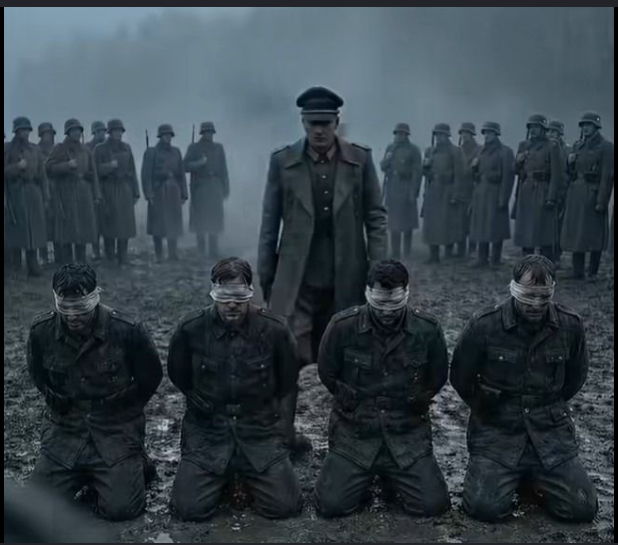
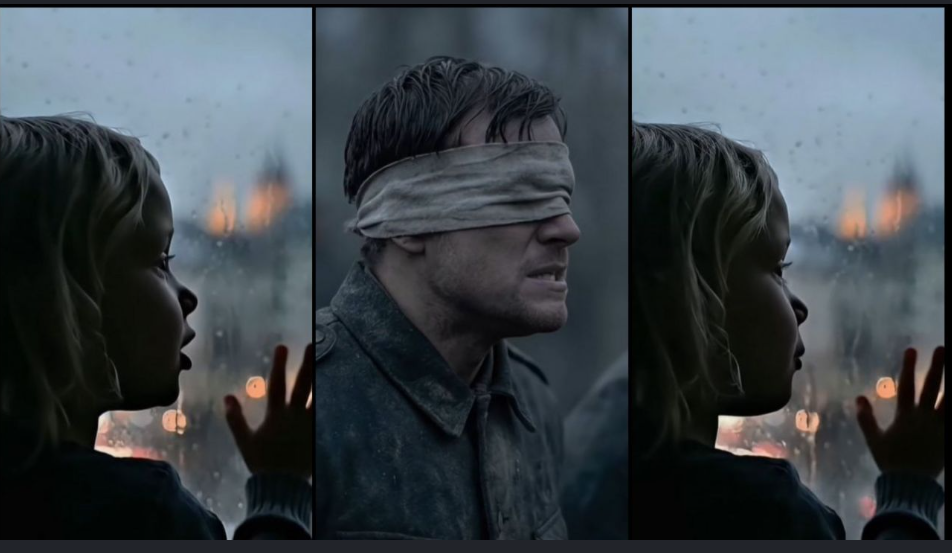
Source: Screenshots from a video published on the Fidesz Budapest Facebook page.
In the video, a little girl waits for her father to come home while her mother prepares dinner in silence and in tears. The scene then cuts to a battlefield, where Hungarian soldiers are shown travelling by helicopter and kneeling blindfolded in the mud. A presumed Ukrainian soldier (in a uniform that resembles the Nazi uniform) shoots the father from behind while he is holding a photo of his daughter.
The video ends with the message: “War only takes from everyone. Let’s not take the risk. Fidesz is the safe choice.”
According to Reuters, the video was AI-generated and created using Google’s tools. When asked about the use of artificial intelligence, government minister Gergely Gulyás did not deny it and said the video reflected the reality of war.
Nobody watching needed to believe the scene was real. The fear just had to feel possible. Voters weren’t asked to accept a claim-they were asked to picture a future where Hungary gets pulled into the war next door.
That made it more than a meme or a quick online attack. It was a fully produced campaign video built around family, children, loss and war-the central themes Fidesz used throughout its campaign. It also fitted into Orbán’s wider “war or peace” message, which presented the election as a choice between Fidesz keeping Hungary out of the war and the opposition allegedly dragging the country into it.
Turning fiction into a political warning
Another AI-generated video appeared on several platforms in early February. It showed Ursula von der Leyen and Péter Magyar in a fictional AI-created scene. In the video, Brussels, represented by von der Leyen, instructs Magyar by phone to immediately send money to Ukraine.
The video looked almost comical, and it was marked as AI-generated. But the framing still mattered. Orbán commented that the video was “only AI now,” but could soon become reality.
Nobody was trying to pass this off as real footage. The point was to dramatise a political claim and put a face on fear- to make an abstract argument about Brussels’ influence feel like something you could watch happen.
Synthetic campaign characters on TikTok
Some of the most interesting AI experimentation during the campaign may not have happened in official campaign videos at all. Lakmusz identified a network of newly created TikTok accounts that used AI-generated characters to promote pro-government narratives and attack the opposition.
These accounts featured a wide range of synthetic or fictional personas: a young woman, an elderly professor, a football ultra, historical characters, a version of Péter Magyar injected with “truth serum” and even an AI-generated monkey.
Several accounts were removed after a short period, but before disappearing they reached tens of thousands, and in some cases hundreds of thousands, of users.
The videos were short, repetitive and built around emotional triggers. They claimed, among other things, that Péter Magyar was violent, that TISZA would make life more expensive and that Magyar was “Brussels’ man”. In several cases, the messages were delivered by children, elderly people or other familiar-looking characters. That made the content feel less like official campaign material and more like ordinary social media communication.
Polish wasn’t the point with these videos as clarity, emotion and repetition were enough to do the job.
Facebook ads and the grey zone of political advertising
Meta banned political, electoral and social issue advertising in the European Union from October 2025, citing the EU’s new transparency rules for political advertising. But the Hungarian campaign showed that restrictions do not necessarily remove political content from platforms. They can also push it into more ambiguous spaces.
According to reporting and monitoring by Hungarian fact-checkers and researchers, Fidesz-linked politicians, candidates and content producers continued to benefit from paid promotion and political messaging on Facebook despite the new restrictions. EDMO and Lakmusz reported cases of political ads and AI-generated videos circulating through pages that were not always clearly official campaign channels.
The campaign also had a cross-border dimension. The Alliance of Vojvodina Hungarians in Serbia, which supported Fidesz, shared and amplified pro-Fidesz messaging. For Serbia, this matters directly: Hungarian campaign messages can travel through Vojvodina’s political networks
Unofficial pages and plausible deniability
The “Nem a mi háborúnk” – “Not Our War” – Facebook page illustrates another challenge for regulators and journalists. The page spread AI-generated war videos with themes similar to Fidesz’s official campaign messaging: children, death, family and men being taken to the front.
According to EDMO, the videos resembled Fidesz’s official war-themed content and appeared in more than a hundred advertisements.
The page’s unclear status is the real issue. Content can look and sound like official campaign messaging without coming from official campaign channels. That gives political actors room to benefit from controversial material while remaining formally disconnected from it.
Future campaigns may not be dominated by one official party account. They may rely on a wider network of aligned pages, influencers, synthetic personas, anonymous profiles and paid content operating in the grey zone.
AI images and visual manipulation
The campaign also raised questions about AI-generated or AI-edited images. Fidesz shared several visuals that appeared to show large crowds of supporters, but closer inspection suggested that people may have been duplicated. In one case, even the Hungarian Parliament appeared to have been moved to the wrong side of the Danube.
Fidesz wasn’t alone in this. Other parties experimented with AI-generated political content too. What set Fidesz apart was scale – AI wasn’t a side experiment, it was woven into the whole communication strategy.
In Serbia, the Alliance of Vojvodina Hungarians also amplified pro-Fidesz messaging. One especially visible embarrassment involved an image of violinist Zoltán Mága with U.S. President Donald Trump and Dr. Bálint Pásztor, the party’s president, accompanied by the message that “the friend of my friend is my friend.” When the image was questioned, party representatives later said it was obvious that it had been created with AI.
But obvious to whom?
Many users do not immediately recognise AI-generated content. Even when they do, repeated exposure to the same message can still shape political perception. The problem is not only whether people believe one image is real. It is whether synthetic content helps normalise a political narrative through repetition.
Why this matters after the election
AI didn’t decide Hungary’s election. Not every synthetic image or video changed a vote, and no two pieces of AI-generated content worked quite the same way. But that’s beside the point.
The Hungarian case shows something useful: a reusable model. Once political actors learn how to combine emotional narratives, synthetic content, paid promotion and unofficial pages, the same approach can return in the next campaign- in Hungary or elsewhere.
What decides the next election might not be one viral deepfake at all. It could just as easily be thousands of small pieces of synthetic content, spread across platforms, some official, some semi-official, some sitting quietly in the grey zone.
That is why Hungary’s election remains relevant in July. The vote is over. The playbook isn’t going anywhere.
A warning for Serbia
For Serbia, the Hungarian case is close to home. Political actors in Serbia are already heavily invested in digital communication, emotional messaging and online mobilisation. Serbia also has a media environment in which political narratives often move between official communication, loyal media, influencers, anonymous pages and regional networks.
If elections are approaching, Hungary offers a preview of how AI-generated political content could be used in a similar environment.
The danger isn’t a single voter fooled by a single deepfake. It’s synthetic content becoming ordinary campaign material – cheap, adaptable, emotionally effective, and hard to regulate.
That’s the lesson from Hungary. AI stopped being a novelty in politics a while ago, now it’s just part of the machine.