Through hands-on training in digital and mobile storytelling, Studio19’s Youth Media Lab is helping young people challenge gender stereotypes and step into public conversations with confidence and critical thinking.
Author: NarativAi
When 32 young people from Tetovo and Gostivar gathered for the first Youth Media Lab workshop, they came with ideas, opinions and questions. Many left with something more: the skills to turn those ideas into videos, and the confidence that their voices deserve to be heard.
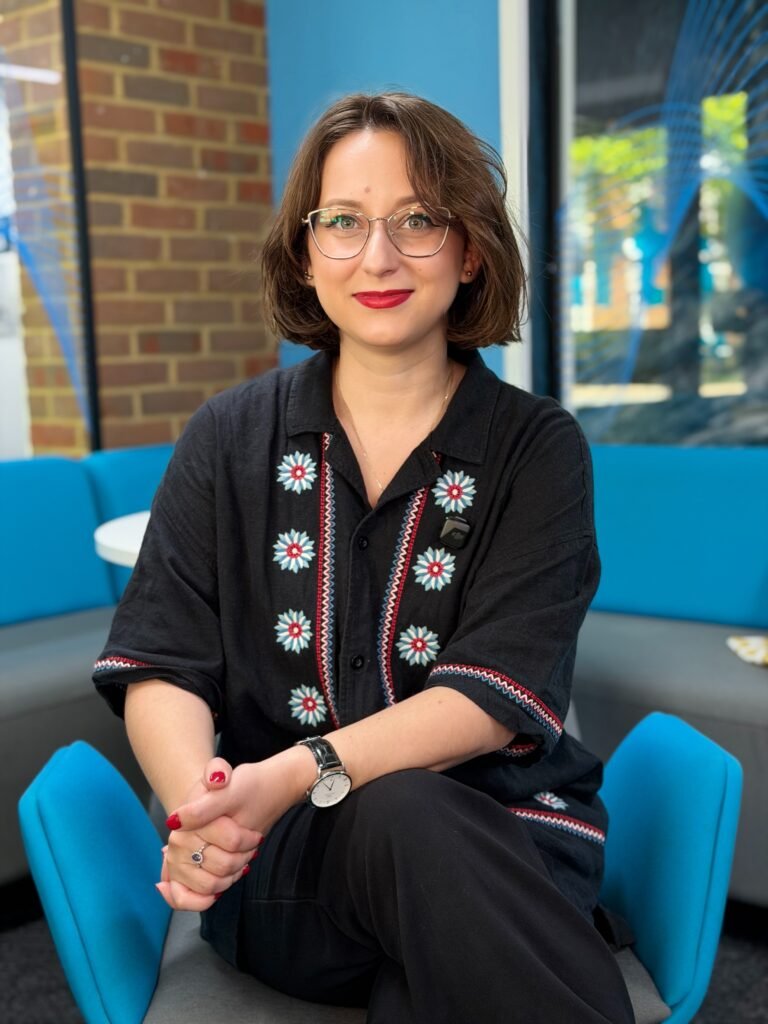
The initiative, run by Studio19, starts from a simple premise. “The idea behind Youth Media Lab is to enable young people to become active creators of media content, not just its consumers,” says Rita Behadini of Shega. “We want to give them the knowledge, skills and space for creative expression, critical thinking and telling stories from their own perspective.”
Making room for difficult conversations
At the heart of the program are conversations about gender equality, stereotypes and the social challenges young people face. For Behadini, involving both young women and young men is essential. “We believe real change begins when we learn to listen to and understand the experiences of others,” she says.
That kind of listening is not always easy to find. According to Behadini, a stigma still surrounds discussions of gender and other sensitive social issues. Young people may have questions and views, and a genuine desire to talk, but they do not always feel free to do so in their everyday surroundings, out of fear of being judged or misunderstood.
“That is exactly why, through Youth Media Lab, we try to overcome these barriers by creating an open space where young people can freely express their opinions, ask questions and hear different perspectives,” she explains. “Through conversations like these, we can gradually reduce stigma and encourage greater understanding, respect and critical thinking.”
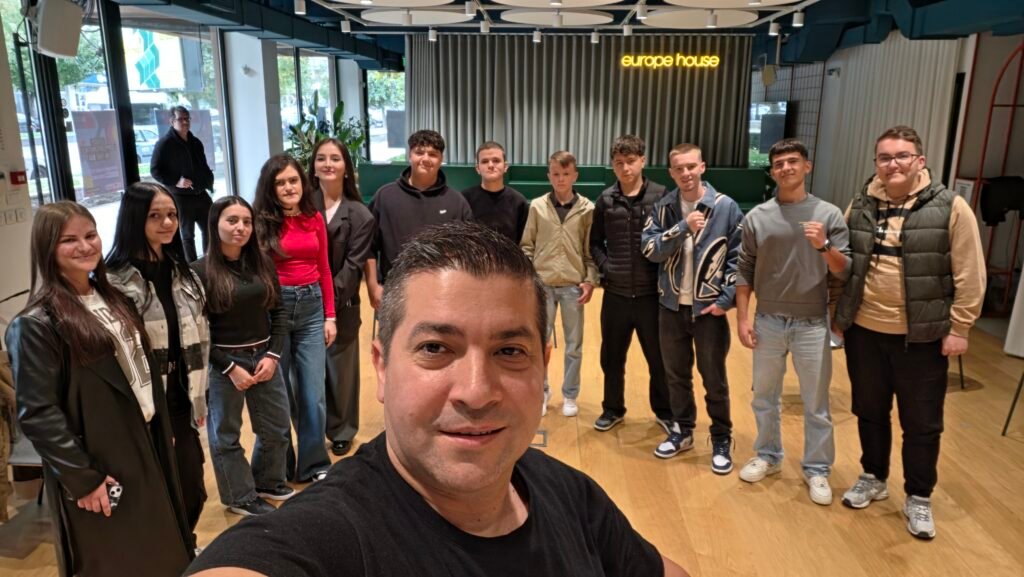
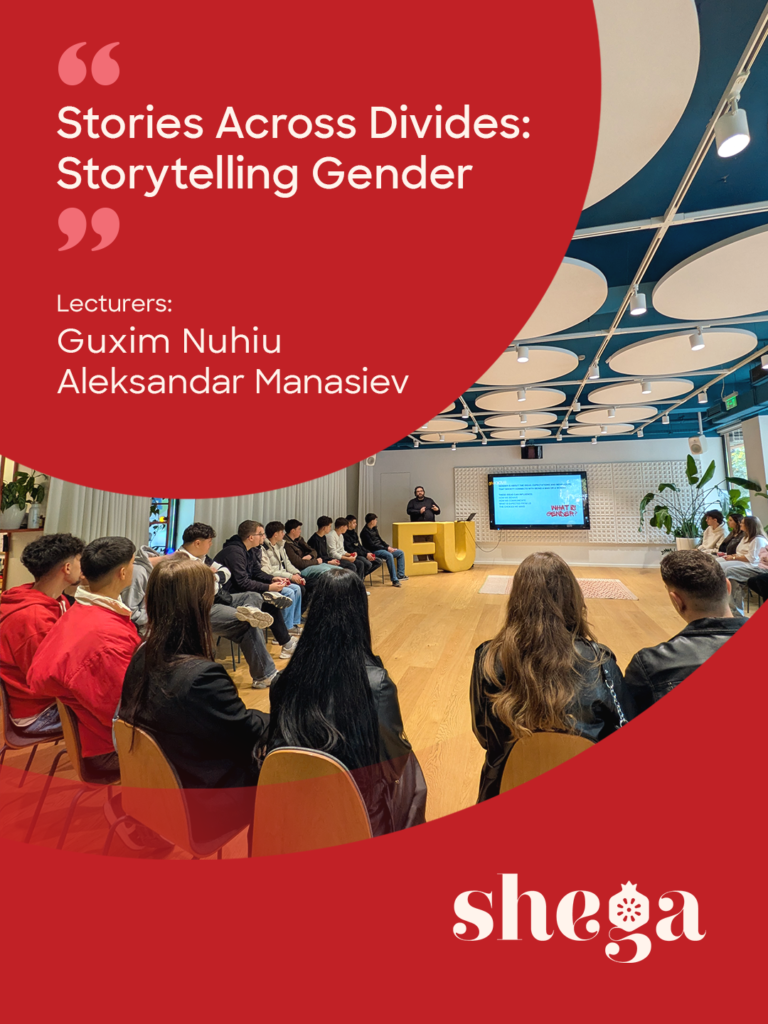
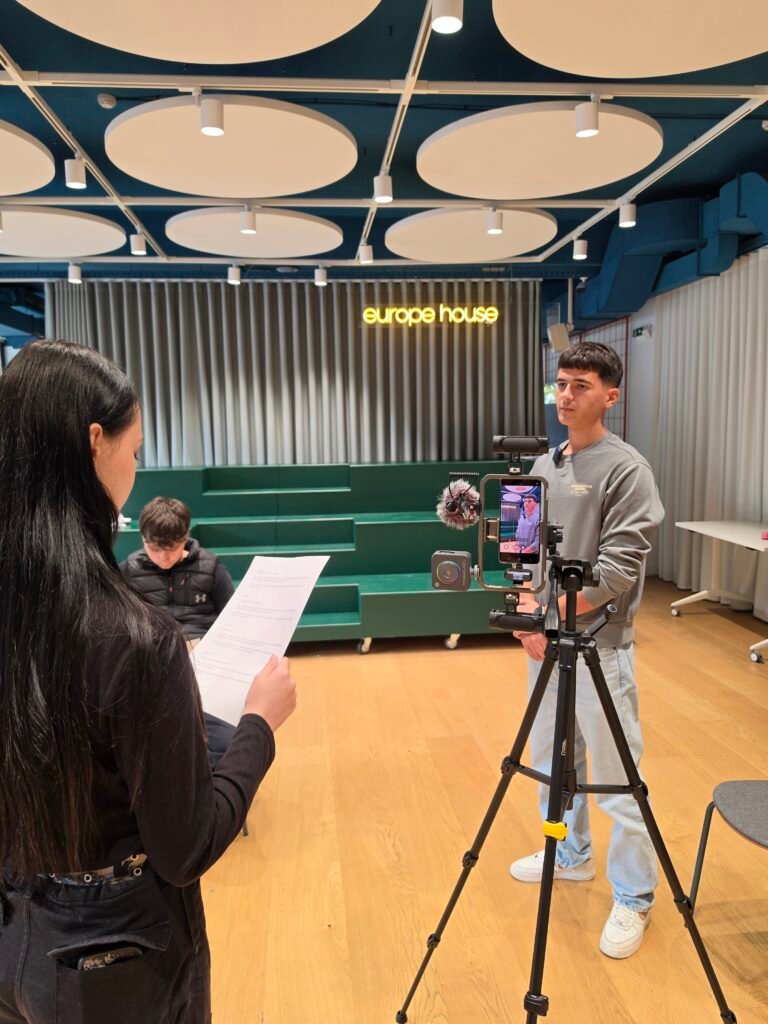
During the workshop, participants discussed gender stereotypes, questioned their own perceptions and explored how stories shape the way we understand the world around us. Their turnout, Behadini says, sends a clear message. “Their interest shows us there is a need for spaces like this, where young people are not just an audience but active participants in the conversations that affect them.”
From idea to video
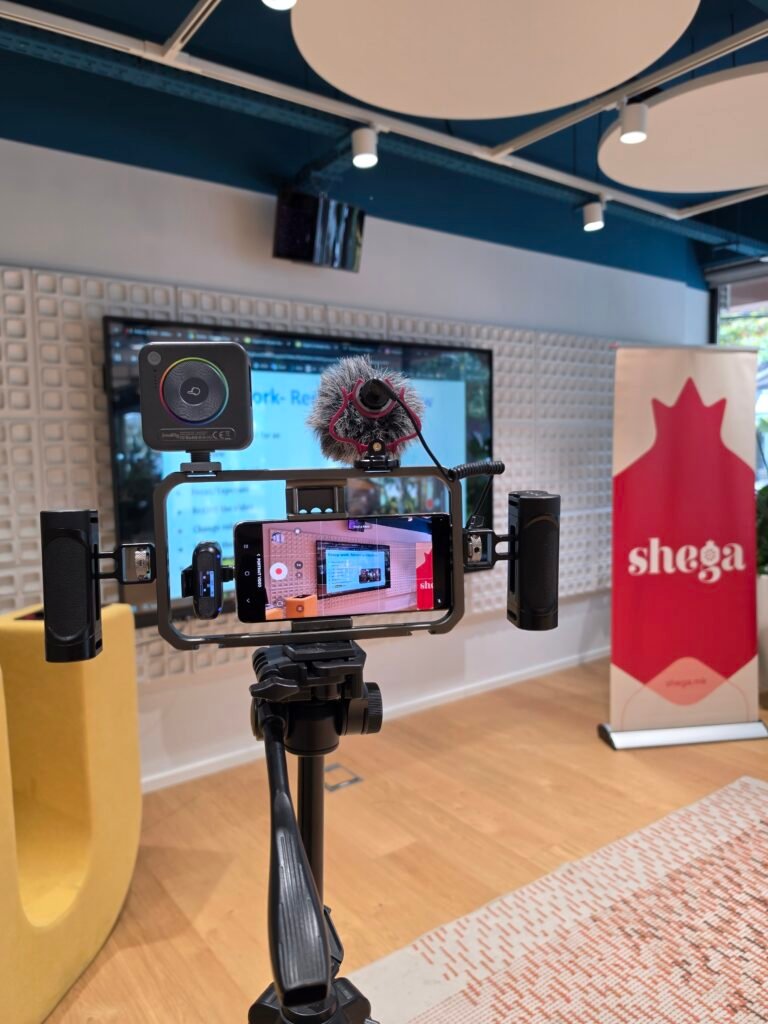
A key part of the program was practical. In cooperation with NarativAI, participants worked with Aleksandar Manasiev on digital and mobile storytelling, learning filming techniques, visual storytelling and how to shape a narrative for a digital audience.
But producing videos was never the only goal. “We want them to use digital platforms to take a more active part in conversations about gender, gender equality and stereotypes,” Behadini says. That means engaging in an informed, critical and responsible way: questioning the information they encounter online, recognising stereotypes and backing up their views with knowledge rather than repeating opinions that dominate social media.
She is candid that this requires more than a single workshop. Young people need continuous support, not only with the technical side of content creation, but also with research, fact-checking and building well-argued messages. “We want Youth Media Lab to help them become young creators who not only have a voice in the digital space, but also know how to use it to spark meaningful dialogue.”
A long-term commitment
Studio19 sees Youth Media Lab as the beginning of a long-term initiative rather than a one-off event. Plans include further practical training, mentorship and new opportunities for young people to produce their own digital content, with a continued focus on gender, equality and social stereotypes.
The door is open to anyone who wants to contribute. “We are open to cooperation with young people, schools, media professionals and organisations that want to share their knowledge, experience or ideas,” Behadini says. “Anyone who wants to learn, create and raise important social issues through media is welcome.”
Measuring success
Asked what she hopes will stay with participants months after the workshop, Behadini does not point to technical skills first. “We would like young people to keep the courage to ask questions, think critically and talk openly about gender and gender stereotypes,” she says.
The real sign of success, she adds, will be whether they keep going: continuing to create content and taking part in online conversations in an informed and responsible way, with the desire to bring about change.
“When we give young people space, support and tools,” Behadini says, “they can create content that not only reaches their peers, but also sparks a wider dialogue and change in the community.”
(This text was written and reviewed by the editor with support from artificial intelligence tools for language editing and stylistic refinement. More on how NarativAi uses AI — Link)