
The Summer School was organised as part of the Training Academy for Journalists and Media Workers (T-AJM), a project funded by the European Union and co-funded by the Konrad Adenauer Foundation, Skopje Office.
Author:NarativAI
A Fake News Debunker and an AI Video Assistant that helps journalists choose the best time to shoot were among the six tools created by young journalists during the NarativAI-led part of the training at the T-AJM Summer School in Ohrid.
The exercise closed a full day devoted to the responsible use of artificial intelligence in journalism and the digital safety skills needed to protect newsroom work.
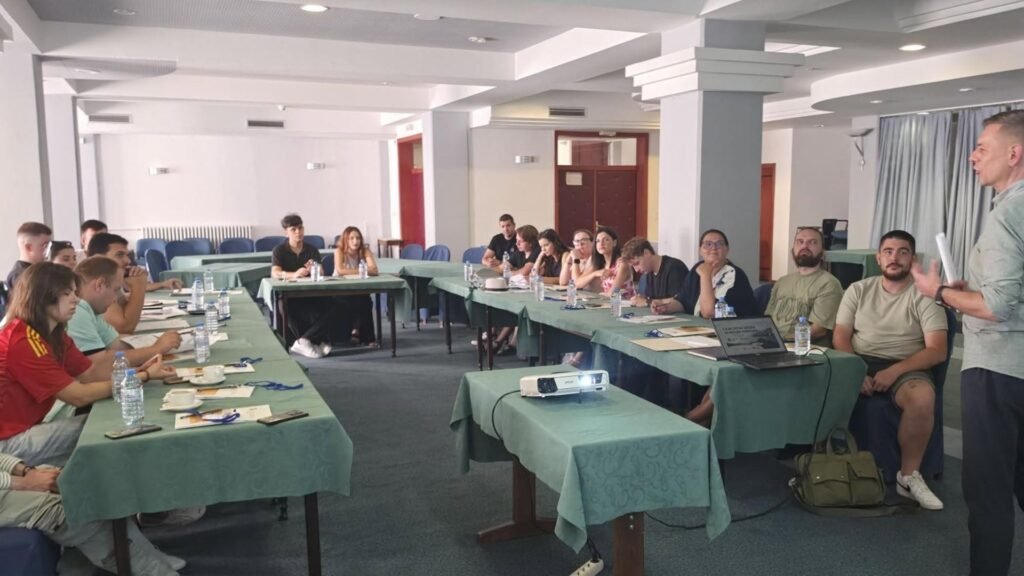
NarativAI founder and media trainer Aleksandar Manasiev led the session during the T-AJM Summer School for Young Journalists, held by the Association of Journalists of Macedonia from 21 to 25 July 2026.
Digital safety starts with everyday habits
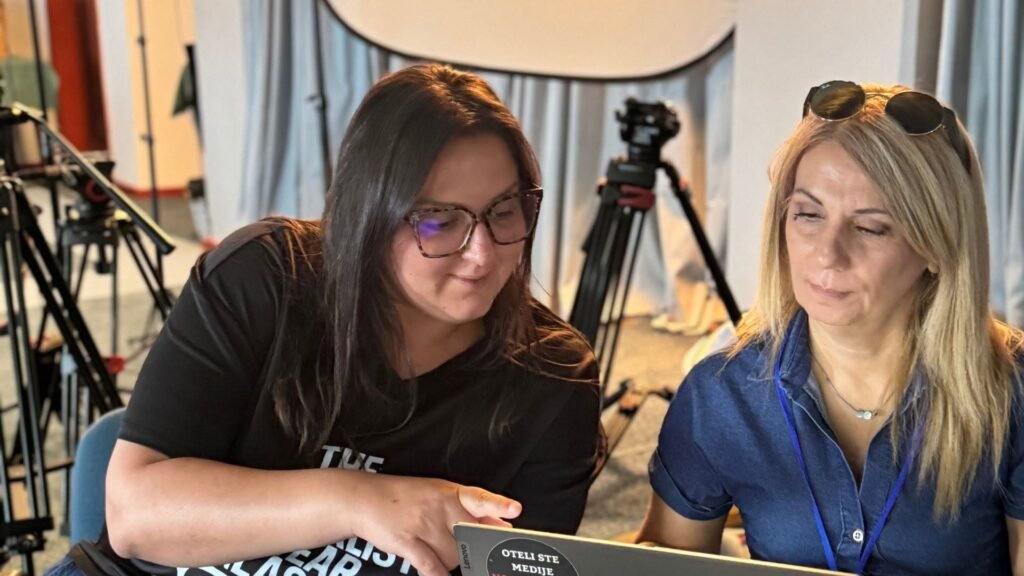
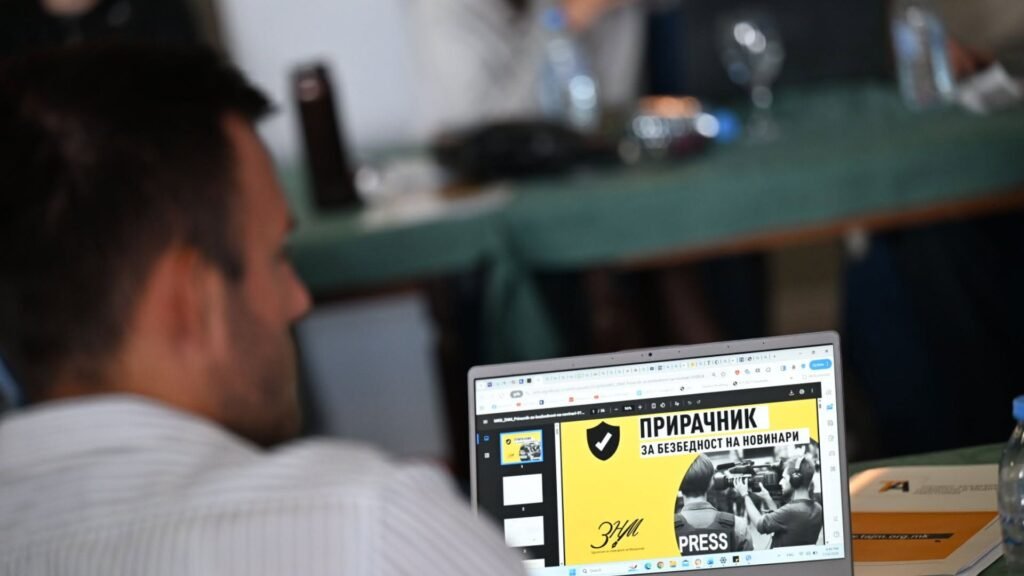
The first part of the training covered the devices and accounts that journalists use every day. Participants checked the security settings and application permissions on their mobile phones and laptops. They also reviewed their password practices, two-factor authentication and password managers.
Working in teams, they tested the strength of their passwords and identified changes they could make immediately.
The group also discussed digital footprints, online identity, doxxing and attacks against journalists. Participants learned how to document threats, preserve evidence and report online abuse.
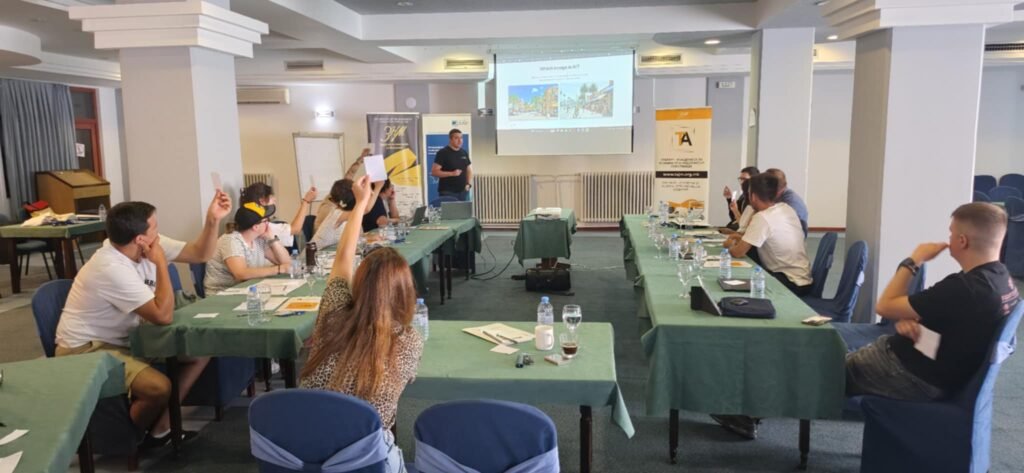
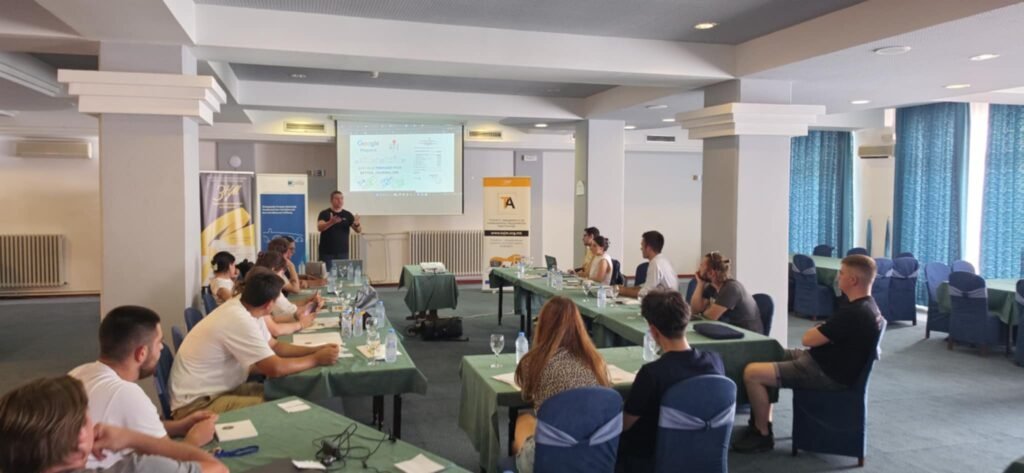
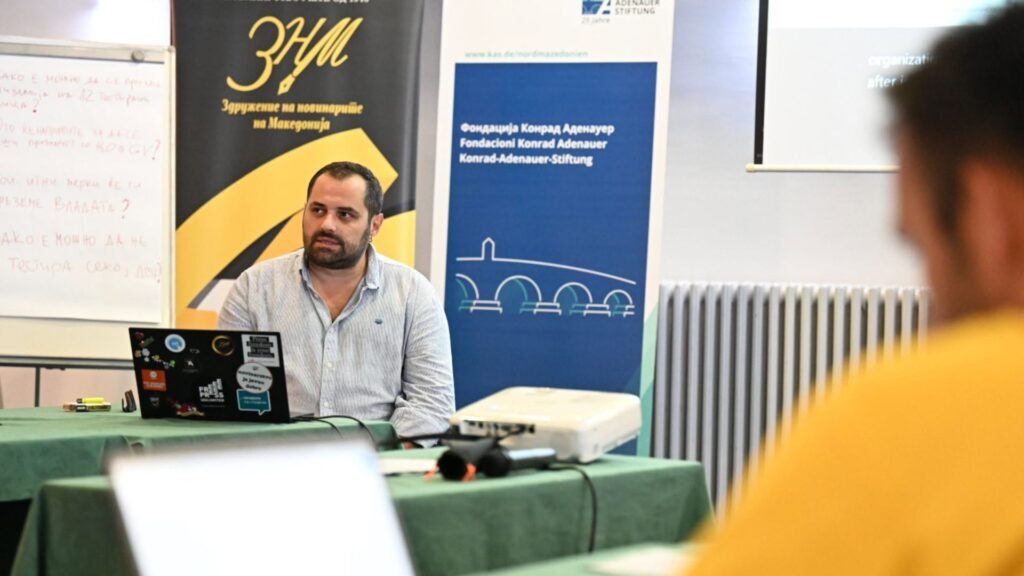
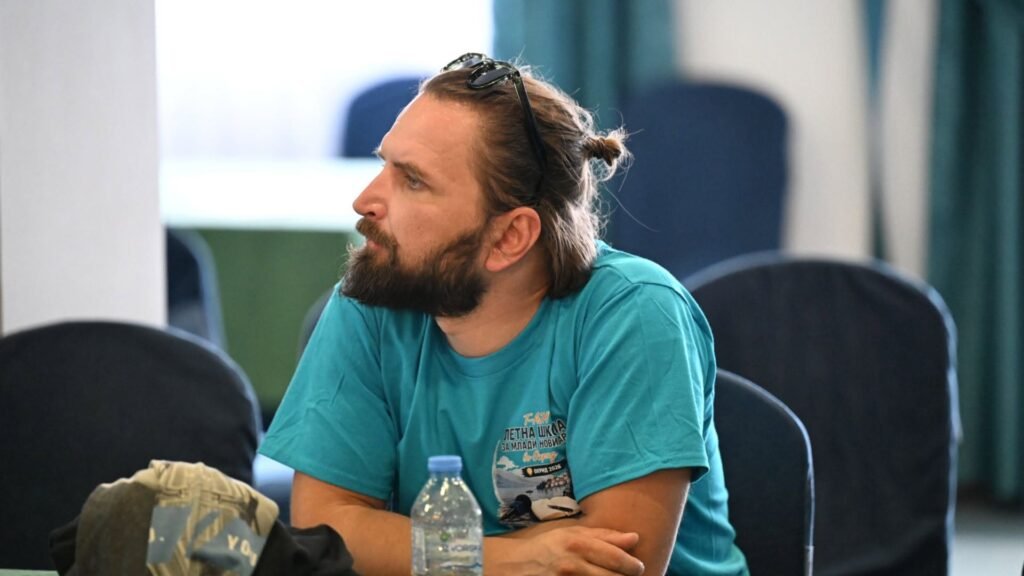


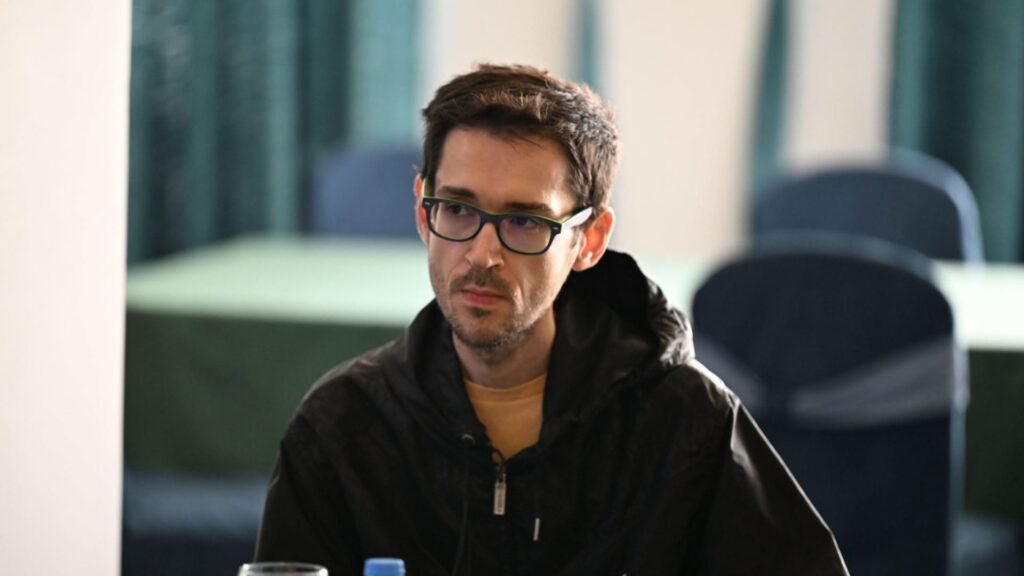
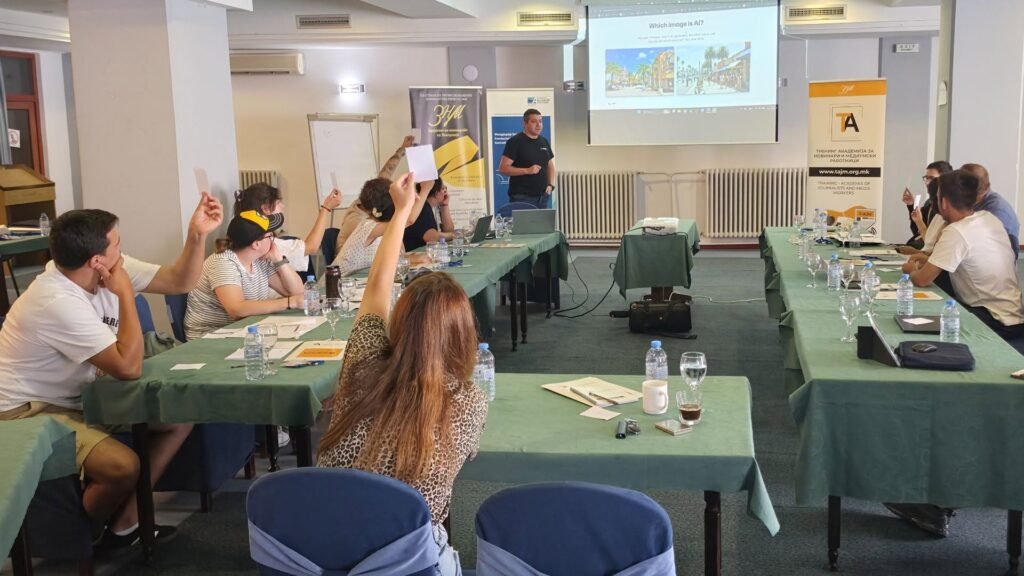
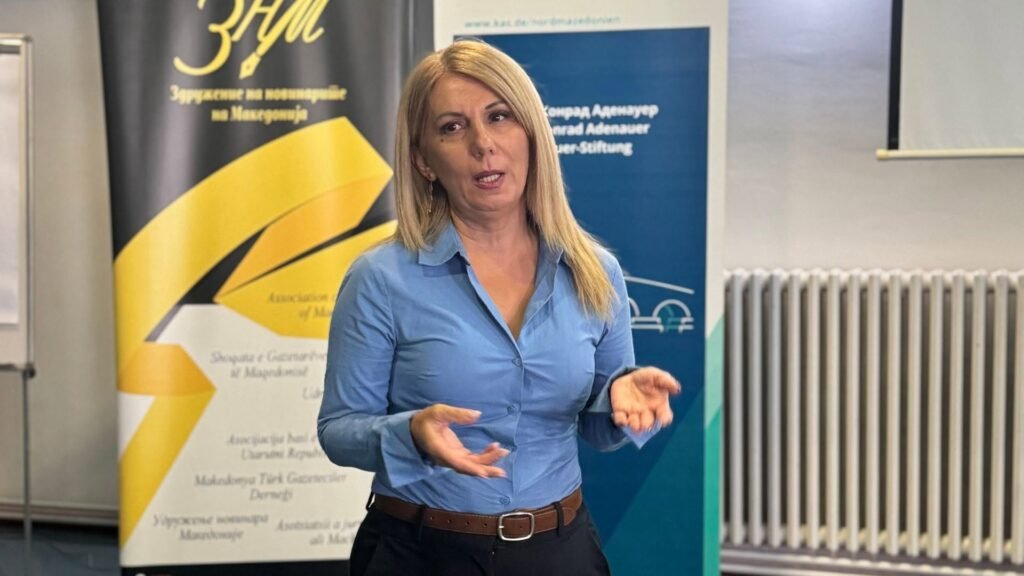

Source: Association of Journalists of Macedonia
Artificial intelligence has also made some digital threats harder to recognise. Malicious actors can create convincing fake photographs, deepfake videos, cloned voices, personalised phishing messages and fake profiles.
During a practical exercise, participants compared real and generated photographs. The task showed why journalists cannot rely only on what looks convincing. They need to check the source, context and details before using visual material.
Putting AI to work in journalism
The main part of the day focused on how journalists can use AI tools while keeping control over their work.
Manasiev presented examples related to research, document and data analysis, transcription, translation, visualisation and preparing content for different platforms.
Participants practised writing prompts for specific newsroom tasks. They learned how to explain the purpose, audience, format, available material and limits of an assignment.
They also saw why a well-written answer can still be wrong. A tool can invent facts, misread a document, leave out context or present uncertain information as if it were confirmed. Journalists must check every claim against the original material and reliable sources.
The group discussed which information should never enter an external tool. This includes confidential documents, personal data, unpublished investigations and details that could expose a protected source.
The session also covered transparency and the labelling of generated content. Examples from the BBC and RTCG showed how media organisations have started setting written rules for the use of these tools.
From an idea to a newsroom assistant
For the final exercise, participants formed six teams. Each team had to identify a problem faced by a small local newsroom and create a custom GPT to help solve it.
The teams did not create general-purpose chatbots. They worked on assistants with clear and limited tasks.
One team created a Fake News Debunker to support the first stage of checking suspicious claims and content. Another developed an AI Video Assistant to help journalists determine the best time to shoot video.
Each team gave its assistant a name, role and set of working instructions. The participants defined what information it could use, what output it should provide and what it must never do.
They also wrote red lines. The assistants could not invent facts, publish independently, expose sensitive information or replace the decision of a journalist or editor.
Finally, the teams marked the points where human review remained compulsory. A journalist had to check the facts, sources, context and language before using or publishing any result.
By the end of the session, the six teams had produced six working concepts for tools linked to real newsroom needs.
The exercise moved the conversation from general claims about artificial intelligence to practical editorial decisions. What problem will the tool solve? What information can it access? What are its limits? Who checks its output? Who takes responsibility for the final result?
The six assistants created in Ohrid are starting points, not finished products. The next step is to test them on real newsroom tasks, identify where they fail and improve the instructions and safeguards before using them in daily work. In the following days, the programme continued with sessions on investigative journalism, led by trainers from some of North Macedonia’s leading investigative newsrooms.
The Summer School was organised as part of the Training Academy for Journalists and Media Workers (T-AJM), a project funded by the European Union and co-funded by the Konrad Adenauer Foundation, Skopje Office.
Read more about the T-AJM Summer School on the AJM website.
(This text was written and reviewed by the editor with support from artificial intelligence tools for language editing and stylistic refinement. More on how NarativAI uses AI — Link)