
Observatorul de Nord is working on the implementation of an AI editorial assistant, in a process carried out with Internews and NarativAI. The idea is not to replace journalists. The goal is to support the newsroom in its daily work-to help with routine information, organization, editorial workflows and responsible use of technology.
Author: Aleksandar Manasiev
When I arrived in Soroca, the first thing I felt was that this was not just another small town on the map of Moldova. The city lies in the north of the country, on the Dniester River, around 160 kilometers from Chișinău. Across the river is Ukraine. War is not an abstract issue here. Disinformation is not a topic for conferences only. And local journalism is not a romantic idea from the past, it is a daily necessity.
In this place, local information can become public service, community memory, early warning system and sometimes even a form of resistance. That is why Observatorul de Nord is not an ordinary local or regional media outlet. In Soroca, it has become something more: a symbol of media persistence, editorial independence and the stubborn belief that a local newsroom can survive only if it stays close to people, and if it keeps up with time.
Its own slogan says a lot: “We observe what others prefer not to see.” The newsroom describes its mission as informing people about everything that happens in the Soroca region, helping solve local problems and serving as a platform for the exchange of opinions. Its vision is even more ambitious: to reach every home in Soroca, including Sorocans who now live in other regions or countries, through its website and social media platforms.
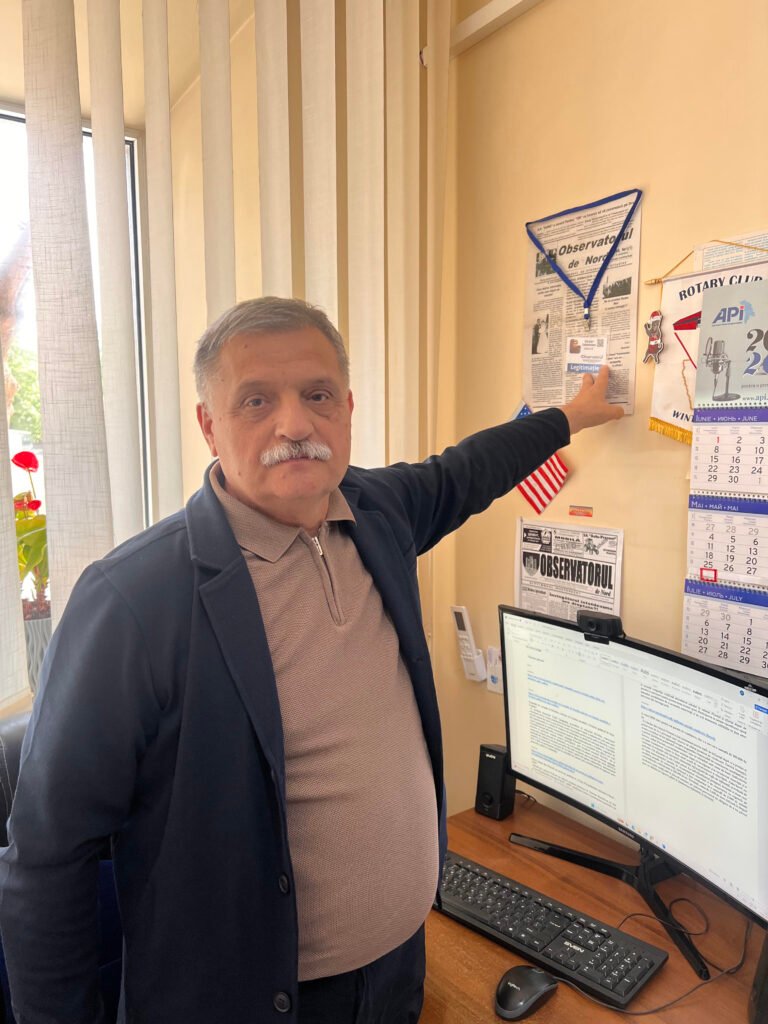
That ambition is visible as soon as you enter the newsroom.
This is not a big media company. It is a small team-but for a local outlet, it is a serious and functional newsroom. The team includes an editor-in-chief, reporters, a video producer, a cameraman and video editor, a social media manager, an IT developer, advertising and administrative staff. In other words, it is a local newsroom trying to do almost everything a modern media organization is expected to do.
And they do a lot. What impressed me most was that this newsroom does not behave like a local outlet waiting for the audience to return to old habits. They go after the audience-on Instagram, TikTok, YouTube, Facebook, Telegram and the website. Every platform is another door into the community. Every format is another attempt to keep local journalism visible, useful and alive.


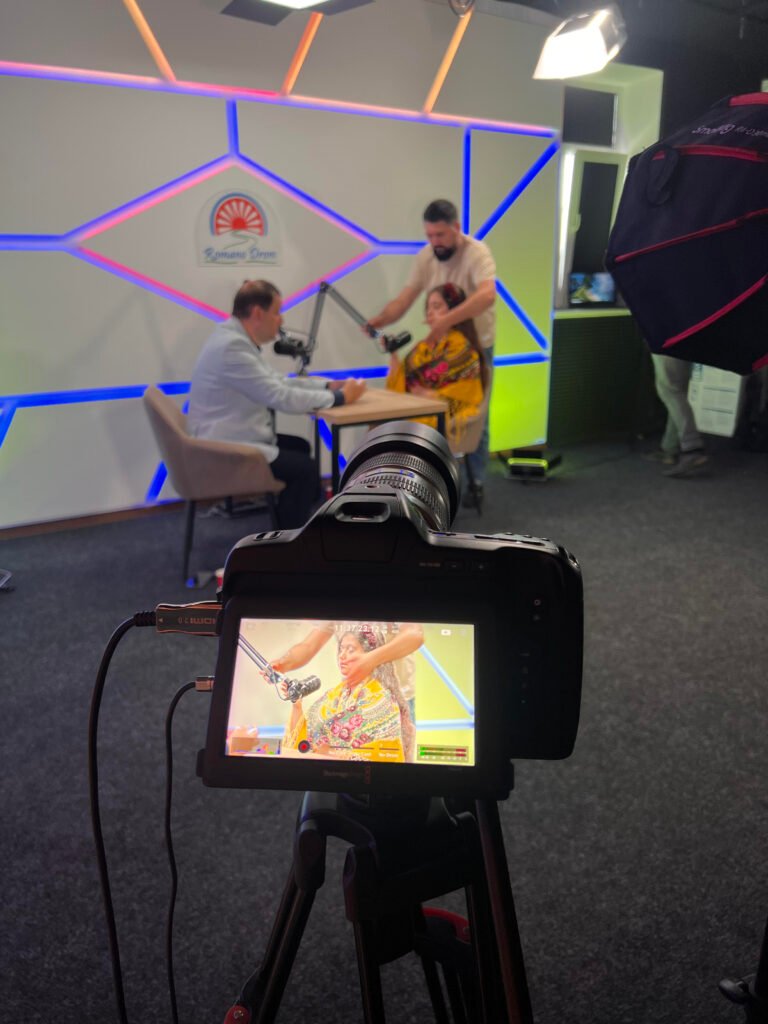
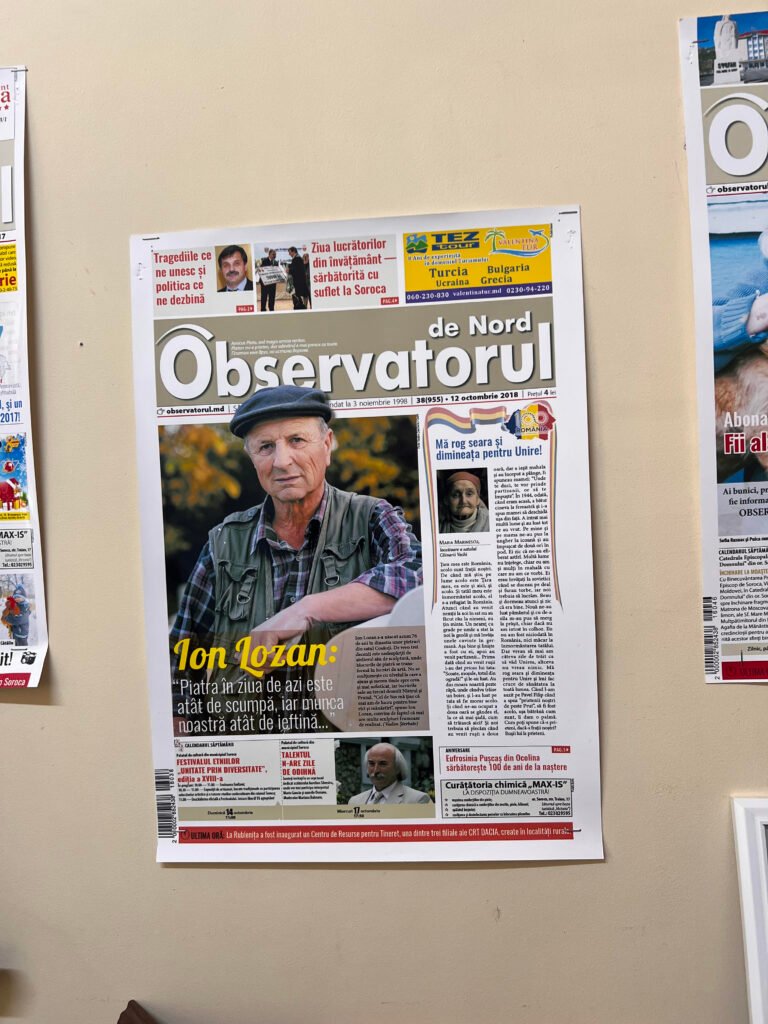

Every day, Observatorul de Nord produces dozens of service-oriented pieces of information for citizens. It covers local problems, public announcements, community events, human stories and issues that national media often miss. But the newsroom does not stop there. Two women journalists work mainly in mobile journalism, filming and editing their own stories. The team also produces analytical and investigative stories, records podcasts, creates video formats and experiments with artificial intelligence.
For a local media outlet, that is not a small thing.
Vadim Șterbate, the newsroom’s head of the video department, understands very well why this transformation matters. When we spoke, he did not describe innovation as a luxury. For him, it is a condition for survival.
“Media need to be very innovative today,” he told me. “If they isolate themselves and continue to work only in the old way, they will lose their audience. People now follow information on phones and computers, and new generations have completely different habits.”
That sentence stayed with me, because it explains much more than technology. It explains the pressure local media are under. It also explains why Observatorul de Nord is not trying to preserve the past as it was. It is trying to protect the public role of journalism by changing the way journalism reaches people.
Vadim used a simple metaphor.
“You can make a very good product, like a very tasty candy,” he said. “But if the packaging is not good and if it does not reach people, no one will taste it. The same is true for journalism. A good story must also be delivered in a way that people will see, understand and want to follow.”
In Soroca, that means writing, filming, editing, posting, adapting and sometimes experimenting before others are ready to do the same.
Observatorul de Nord has an audience that shows this connection with the community. According to its own presentation, the website reaches around 200,000 users, while its Facebook page has around 50,000 followers. The site records around 500,000 page views per month, with readers not only from Moldova, but also from Romania, Poland, Italy, the United States, Germany and other countries – proof that local media can also serve a dispersed community abroad.
But numbers alone do not explain trust. Vadim explained it in a much more direct way.
“For us, the strongest sign of trust is when people call us, invite us to come, and ask us to show their problems,” he said. “When people ask a local media outlet to come and report on their issue, it means they believe that media outlet is important and trustworthy.”
That may be the clearest definition of local journalism I heard in Soroca. Trust is not an abstract value. It is a phone call. It is a person asking the newsroom to come. It is a community believing that someone will listen.
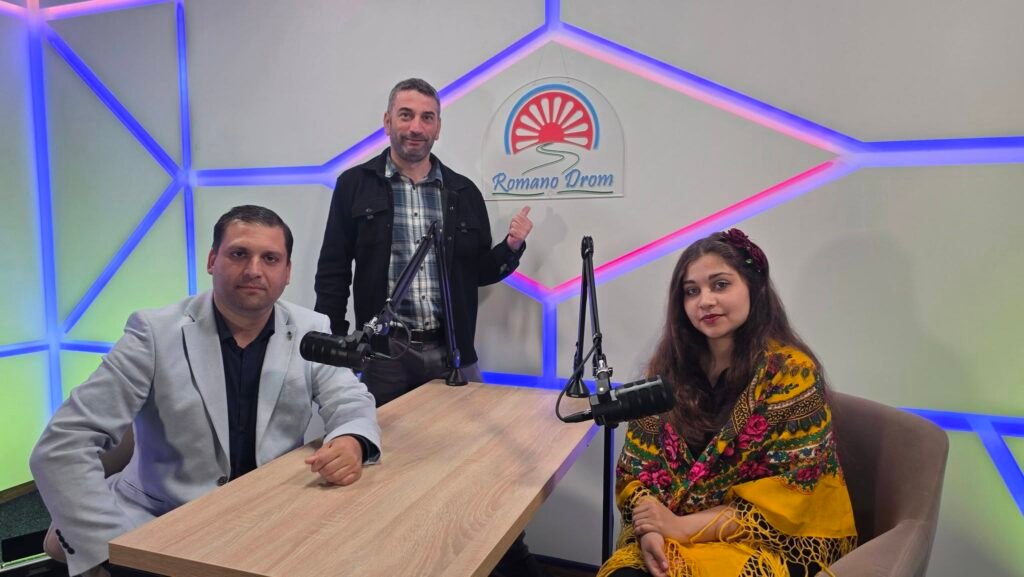
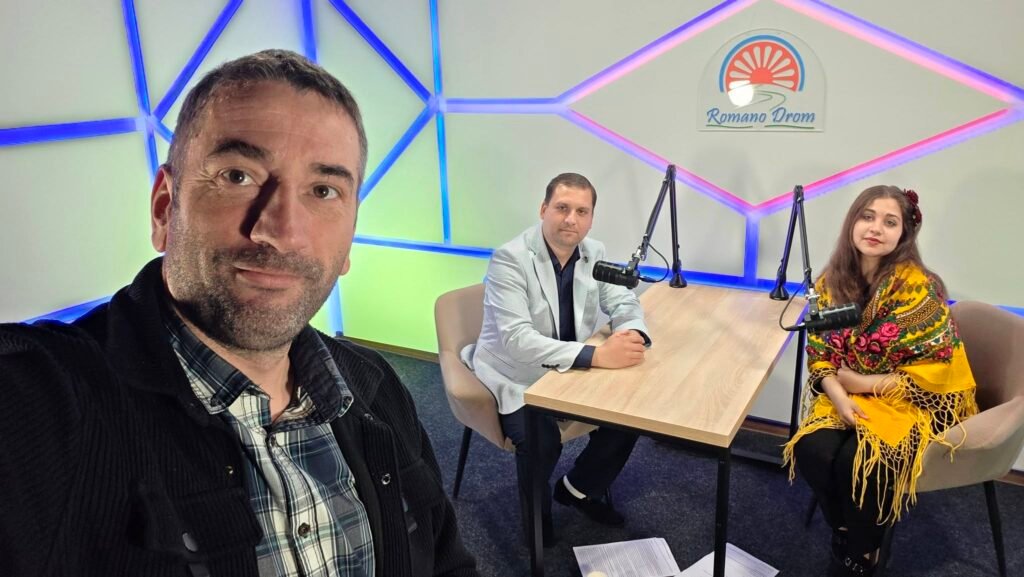
Living and working in a multiethnic community, Observatorul de Nord also reflects that diversity in its content and public presence-during our visit, the podcast they were recording was hosted by a young Roma woman active in the NGO sector, a small but telling example of how the newsroom opens space for different voices from the community.
Vadim compares local media to a family doctor.
“A family doctor cannot perform serious surgical interventions and does not have all the specialized departments of a large hospital,” he said. “But a family doctor can help with prevention, early diagnosis and basic treatment before a problem becomes much more serious. Local media can do the same through information.”
In a region like Soroca, this role becomes even more important because information does not move in a neutral space. Russian propaganda and disinformation about the war in Ukraine are present here. The border is close, and so are the narratives trying to turn people against Ukrainian refugees.
VVadim gave me a simple example: if, say, twenty cars were caught committing traffic violations, a video posted online showing the one with Ukrainian license plates could become the center of a negative story. He also mentioned false stories circulating widely, claiming that public money is being given to Ukrainian refugees, even though this is not the case. These messages are meant to create resentment and division.
“There is a lot of propaganda and a lot of disinformation in this region, especially around the war in Ukraine,” he said. “Much of it tries to create negative attitudes toward Ukrainians and Ukrainian refugees.”
The newsroom’s answer is not only fact-checking from a distance. It is reporting from the ground. Observatorul de Nord produces stories with Ukrainians and refugees who came to the community, allowing them to speak directly about what they experienced, the attacks they survived and the reality of war.
That is where local journalism becomes more powerful than many national debates. It brings the story back to people, voices and lived experience.
Still, what makes Observatorul de Nord especially interesting is not only its commitment to traditional journalistic values. It is the way the newsroom combines those values with new tools.
The team has already experimented with virtual presenters – AI-generated avatars used in video content. Vadim says they were among the first in Moldova, and perhaps in this part of Europe, to use such avatars for news. The experiment even became a point of public attention.
The reaction, he admits, was mixed.
“People can feel that the presenter is not a real human being,” he said. “They can sense that it is virtual, that the voice and the image are not completely natural.”
But he also explained why the tool can be useful. During elections, for example, information often comes late at night and has to be published quickly. A virtual presenter made it easier for the newsroom to prepare and distribute election information when the usual production process would have been more difficult.
This is where Observatorul de Nord’s approach becomes important. The newsroom is not using artificial intelligence simply because it is fashionable. It is trying to understand where AI can help a small team work faster, organize information better and serve the audience more efficiently – while keeping journalistic responsibility in human hands.
That is also why Observatorul de Nord is one of the rare media outlets, especially among local media, that has developed its own AI guidelines. This matters. In many newsrooms, AI is already being used informally, without clear rules, transparency or editorial control. In Soroca, the team is trying to do the opposite: to experiment, but also to define boundaries.
At the moment, Observatorul de Nord is also working on the implementation of an AI editorial assistant, in a process carried out with Internews and NarativAI. The idea is not to replace journalists. The goal is to support the newsroom in its daily work – to help with routine information, organization, editorial workflows and responsible use of technology.
For a newsroom like this, AI is not a futuristic concept. It is a practical question: how can a small local team continue to produce relevant journalism in a media environment where resources are shrinking, platforms are changing and audiences are moving faster than ever?
Vadim is clear that the journalist remains central.
“There is no way around it,” he said. “The journalist today has to be universal and multifunctional. A journalist should know how to monitor information, film video, edit material and write text.”
That may sound demanding, and it is. But in Soroca, it also sounds realistic.
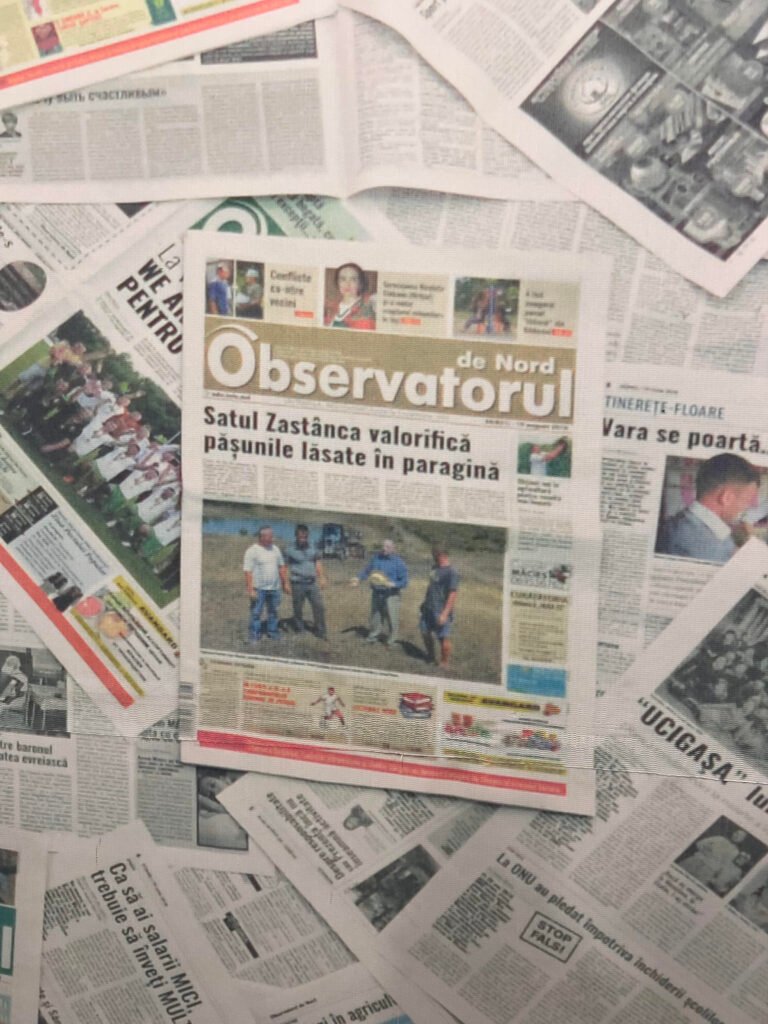
Observatorul de Nord was born in 1998 as a printed newspaper. For many years, the old model worked: subscriptions and advertising kept the newsroom alive, and at times even profitable. But the team understood early that the ground was shifting. Newspaper sales were falling, advertising was moving to dedicated online platforms, and audiences were no longer waiting for information to arrive on paper. Instead of allowing the crisis to define them, they changed course-first toward digital platforms, and later toward video, social media, podcasts and AI experiments. Today, their struggle for independence is not only editorial, but also financial: to remain free from political and commercial pressure, the outlet also relies on grants from donors and international organizations that support independent media.
This is the reality of many local media in the region. Independence is not only an editorial position. It is also a financial struggle. And yet, in Soroca, I did not see a newsroom waiting for better times. I saw a team trying to build them.
They report on local problems. They make videos. They produce podcasts. They experiment with AI. They write guidelines. They train themselves to work across platforms. They serve their community while also speaking to Sorocans abroad. They remain local, but they do not think small.
That may be the most important lesson from Observatorul de Nord. Local media do not survive by standing still. They survive by staying useful. By being present. By earning trust every day. By adapting without giving up their principles. In Soroca, on the banks of the Dniester, Observatorul de Nord is doing exactly that.